
Discover how NVIDIA's new RTX Spark superchip challenges Intel x86 and Apple Silicon with 1 Petaflop of local AI power and massive Blackwell graphics.
The stage of Computex 2026 in Taipei sanctioned what many industry analysts predicted, but which no one imagined could materialize with this technological magnitude. During the opening keynote, NVIDIA CEO Jensen Huang unveiled NVIDIA RTX Spark, a unified computing platform (Superchip) destined to redefine the personal computer ecosystem for decades to come.
Developed in close collaboration with Microsoft and with MediaTek's strategic support for interconnect logic, RTX Spark marks the official and aggressive debut of the Santa Clara house in the Windows on Arm consumer CPU market.
We are not faced with a simple low-power system-on-chip (SoC), but a real heterogeneous superchip architecture, printed on the TSMC custom 3-nanometer node, which encloses over 70 billion transistors in a single package. The declared goal? Breaking down the x86 duopoly of Intel and AMD, surpassing the energy efficiency of Apple Silicon's M-series, and ousting Qualcomm's initial attempts in the Windows on Arm market, radically transforming the operating system into a local "agentic" artificial intelligence platform.
"The PC is reinventing itself. For forty years we have clicked on icons and typed commands to launch applications. With RTX Spark and Microsoft Windows, the user asks and the PC runs on its own. This superchip brings the entire NVIDIA ecosystem and CUDA, Tensor Core, Blackwell architecture, directly into the form-factor of a laptop with all-day battery life." — Jensen Huang, CEO of NVIDIA at Computex 2026
The Anatomy of Silicon: The N1X CPU and Blackwell GPU
The real strength of RTX Spark lies in its "co-designed" approach, where each logical block shares the same ultra-low latency interconnect infrastructure. The computational heart of the chip is divided into two symbiotic macro-areas:
The Arm CPU Subsystem "N1X"
The CPU component is entrusted to the proprietary N1X architecture, based on the Arm v9.2 instruction set. NVIDIA has implemented an asymmetric cluster with a total of 20 cores. Although the specific details on the operating frequencies have not yet been fully disclosed, the architectural rumors speak of a configuration structured in high-performance clusters (Performance Cores) equipped with large out-of-order execution pipelines and high-efficiency clusters (Efficiency Cores) optimized for background loads and energy savings.
The N1X CPU features a generous single-core private Level 2 (L2) cache subsystem and a shared ultra-high-throughput Level 3 (L3) cache designed to minimize data access times before calling the main memory bus.
Blackwell's 6144 CUDA Core graphics engine
On the graphics front, NVIDIA has not compromised. Instead of integrating a standard mobile-class GPU, it integrated a full-fledged die derived from the Blackwell desktop architecture (the same architecture behind the RTX 5000 series). We are talking about 6144 CUDA cores, flanked by the fifth-generation Tensor Cores and the fourth-generation RT Cores for real-time ray tracing.
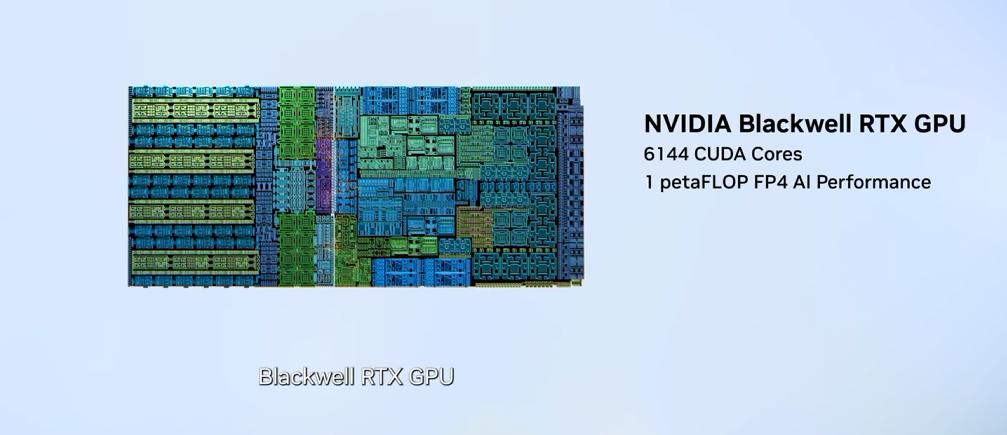
In terms of pure raster computing power and shading, this configuration puts the RTX Spark in the same performance range as a GeForce RTX 5070 Mobile-class discrete GPU, but with a radically lower thermal profile thanks to the absence of the transmission losses typical of discrete PCIe buses. Native support for technologies such as DLSS (Deep Learning Super Sampling) with Frame Generation and Ray Reconstruction ensures that this chip can handle gaming at native 1440p resolution with maximum detail without saturating the device's thermal limitations.
The Breakthrough of 128 GB Unified Memory
One of the historical bottlenecks of traditional x86-based PCs is the clear separation between system memory (RAM) and video memory (VRAM). This paradigm requires the continuous passage of assets and data through the PCI Express bus, introducing latencies and limiting the maximum model size that the GPU can handle.
NVIDIA RTX Spark solves this problem by implementing a Unified Memory architecture of up to 128 GB at very high bandwidth. Using interconnects similar to those seen on Grace Blackwell datacenter platforms, the N1X CPU and Blackwell GPU access the same pool of physical memory with total hardware consistency. This means that there are no more duplications of data in the memory address space.
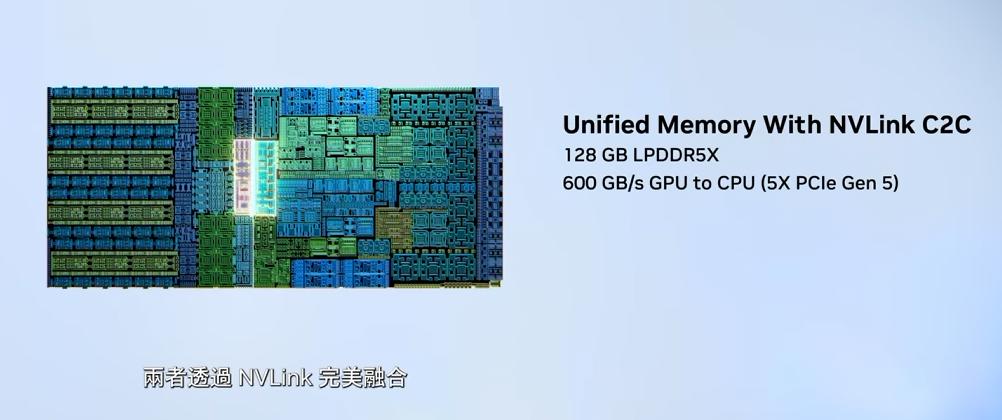
For developers and professionals working on on-premises machine learning frameworks (such as LLMs or stable image generators), having 128 GB of shared-access memory means being able to load large language models (Large Language Models) up to 70 billion parameters (70B) locally and directly execute, previously relegated exclusively to server infrastructures or exorbitantly expensive desktop multi-GPU configurations.
AI Performance: 1 Petaflop for the Age of Autonomous Agents
If performance in video games represents a fundamental pillar, the real raison d'être of RTX Spark is neural computing. Thanks to the integration of the advanced mathematical extensions of the Blackwell architecture, the chip is able to deliver up to 1 Petaflop of local AI computing power using native NVFP4 (4-bit Floating Point) precision.
This leap in performance redefines the concept of "AI PC". While the previous generation processors stopped at NPU values between 40 and 50 TOPS, RTX Spark operates on a completely different scale of magnitude, enabling so-called local AI Agents.
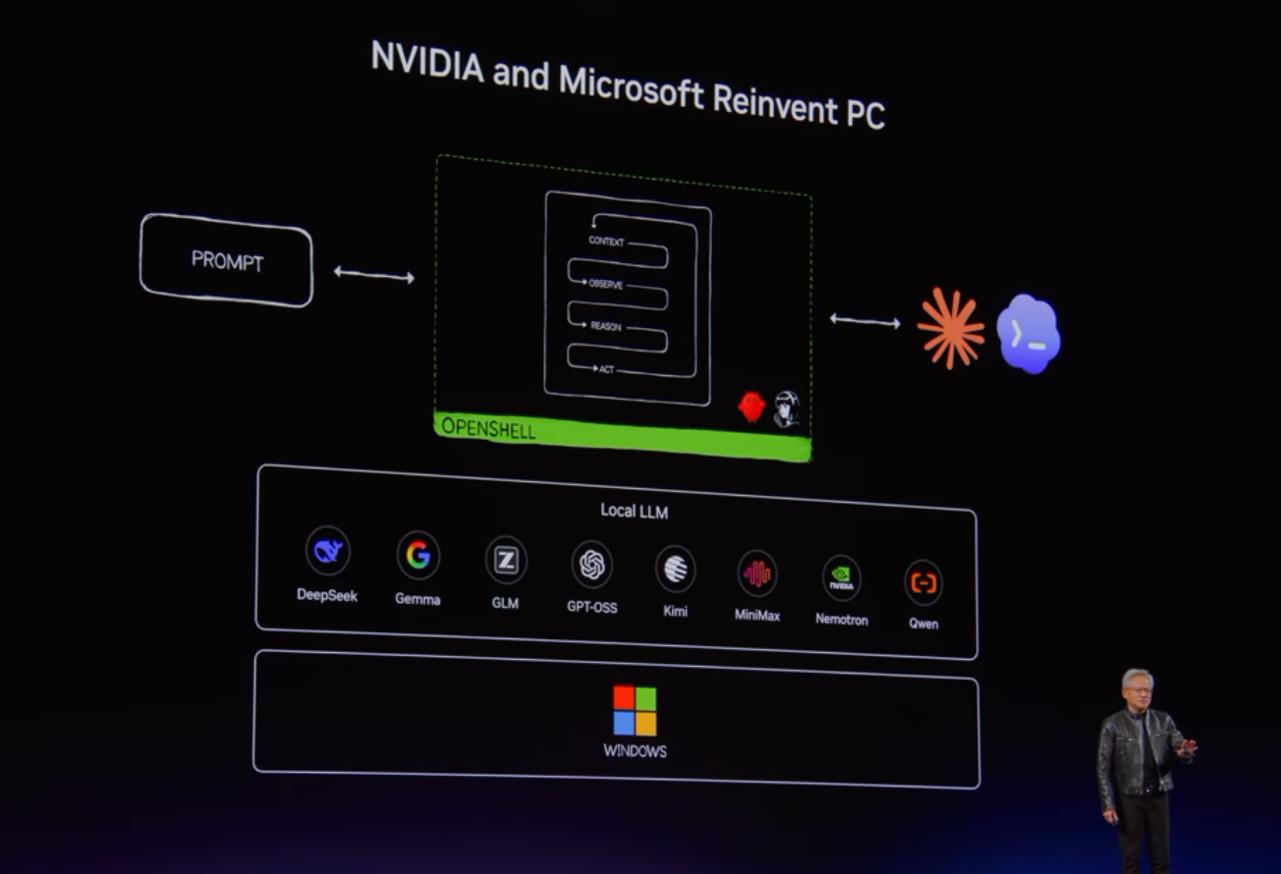
We are no longer talking about simple chatbots that respond to isolated queries, but of persistent autonomous agents that can monitor the user's workflow, understand the context of the screen in real time, read and index complex files in the background, and perform multi-step actions within the operating system in total security.
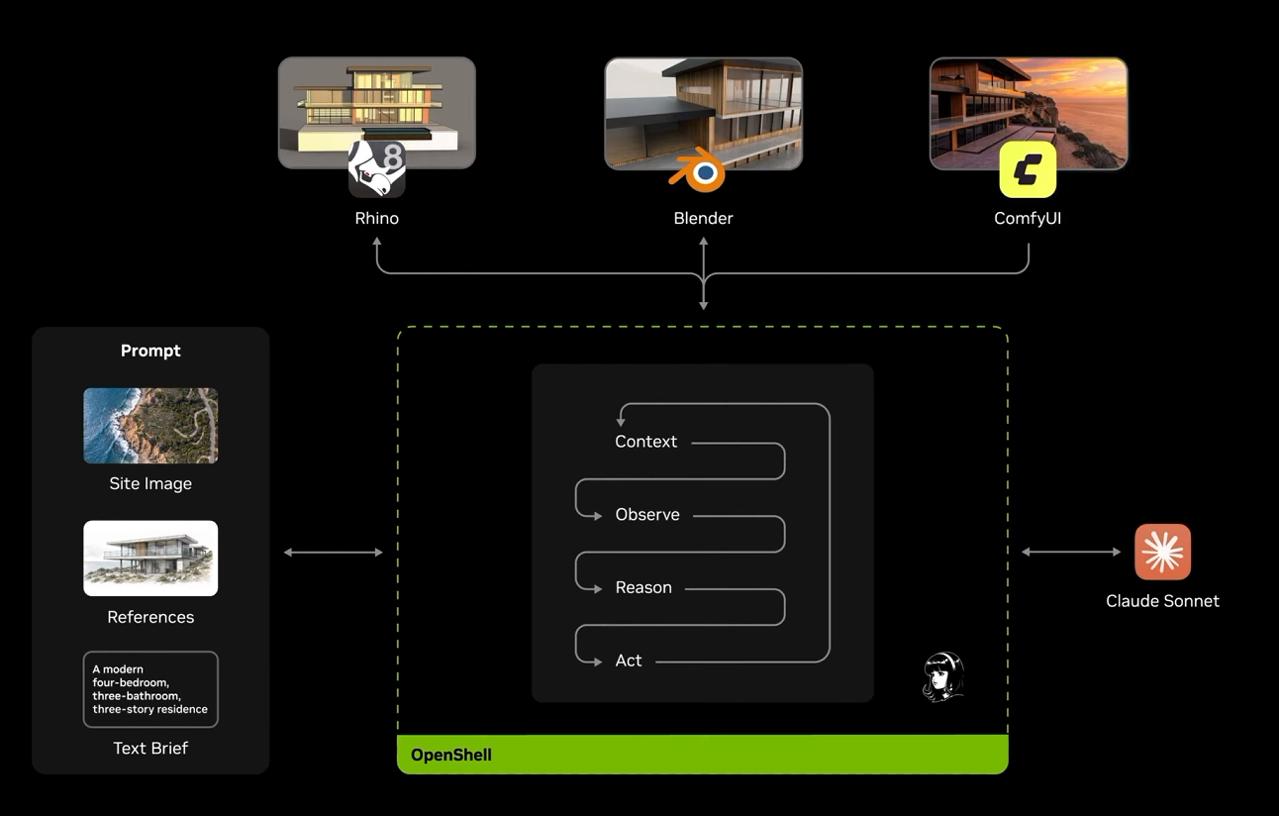
To mitigate the inherent security risks associated with operating autonomous AI agents, NVIDIA and Microsoft announced the NVIDIA OpenShell suite. It is a set of security primitives integrated at the hardware and kernel level that allows the end user to define granular and insurmountable policies, establishing exactly what AI agents can and cannot view, modify, or transmit.
Breaking the Curse of Windows on Arm: Native Compatibility and Anti-Cheat
Until now, the biggest obstacle to the mass adoption of Arm-based Windows systems has been software compatibility, especially in the PC gaming sector. The emulation of 64-bit x86 applications has made great strides, but the insurmountable obstacle was represented by Anti-Cheat software at the Kernel level (such as Easy Anti-Cheat, BattlEye, or Ricochet), used by the main competitive multiplayer titles, unable to work under layers of software translation.
NVIDIA has directly addressed the problem by announcing a partnership with leading developers of security and anti-cheat software. RTX Spark-based devices will integrate runtime libraries and hardware-accelerated binary translation modules that will allow popular anti-cheat software to run natively on Windows on Arm.
This move effectively eliminates the last major barrier that separated hardcore gamers from the Arm ecosystem, allowing titles such as Call of Duty, Fortnite, or Apex Legends to run immediately without performance penalties or system bans.
The long-term roadmap: from Spark to Feynman
The announcement of Computex 2026 was not limited to the first generation of the superchip. NVIDIA wanted to reassure the industry and business partners by outlining a solid three-year roadmap, demonstrating the fact that the commitment to the client PC sector is not a temporary experiment but a long-term strategy.
| Chip Generation | CPU architecture | GPU architecture | Memory Technology | Launch Target |
|---|---|---|---|---|
| RTX Spark (Gen 1) | Arm N1X (20 Cores) | Blackwell (6144 CUDA) | Unified LPDDR5X | Fall 2026 |
| NVIDIA Rubin Platform (Gen 2) | Vera CPU | Rubin GPU | Unified LPDDR6 | 2027 / 2028 |
| NVIDIA Rosa Feynman (Gen 3) | Rosa CPU | Stacked Feynman GPU | Next-Gen Ultra Bandwidth | Early 2029 |
As can be seen from the strategic planning, the second generation will raise the bar even higher by introducing the Vera Rubin platform, which will adopt LPDDR6-class memory and Rubin GPU cores with third-generation Transformer Engine, followed by the revolutionary stacked die design of the Feynman architecture.
The Hardware Ecosystem: The First Devices Coming Soon
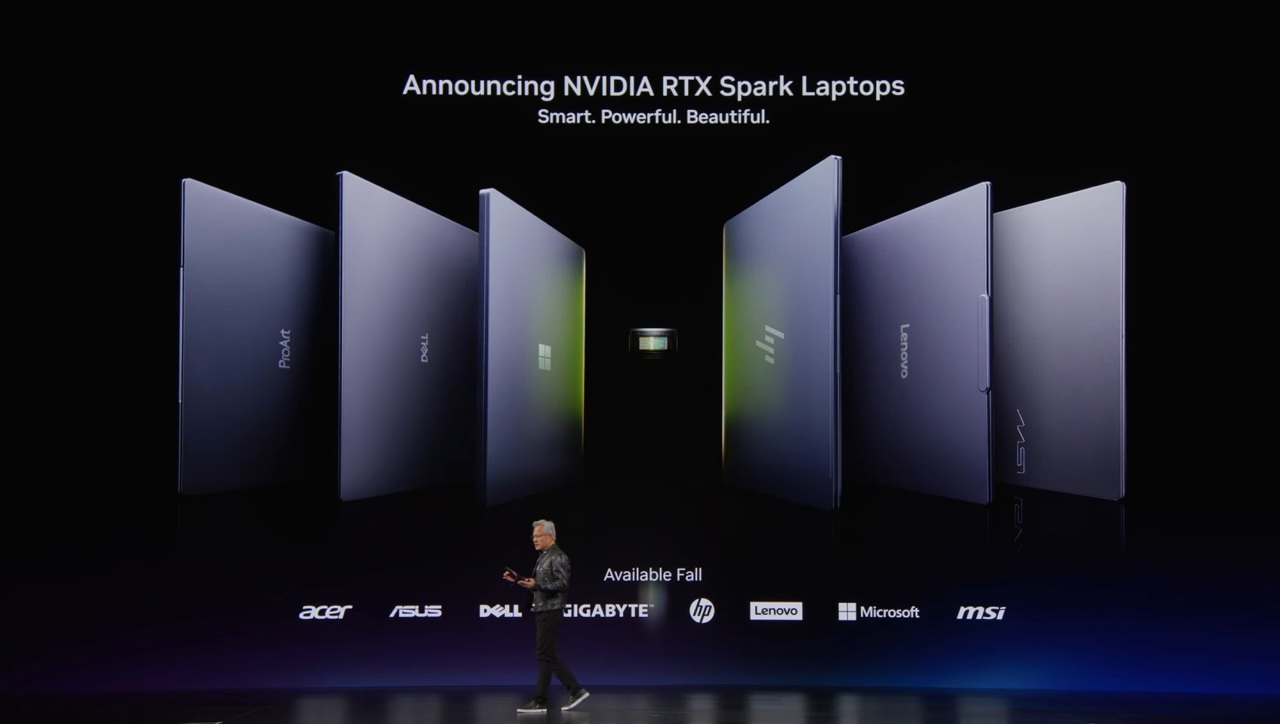
The market debut of the first commercial systems based on NVIDIA RTX Spark architecture is set for Fall 2026 (with first shipments expected approximately in the month of October). The main global Original Equipment Manufacturers (OEMs) have already shown their working and evolved prototypes during the days of the fair:
- ASUS ProArt P16 and P14 AI: Mobile workstations dedicated to content creators that take full advantage of the 128 GB of unified memory for 8K HDR video editing and local 3D rendering via NVIDIA Omniverse. A desktop Mini PC with an extended thermal headroom of up to 140 W peak will also be marketed.
- Microsoft Surface Laptop Ultra: The flagship of the Redmond hardware division. An ultra-thin device with a PixelSense Ultra Mini LED display, designed specifically as the go-to machine for local AI developers.
- HP OmniBook Ultra 16 & X14: Business and enterprise solutions that focus on autonomy (estimated over 24 hours of continuous use) and native integration of workflows protected by NVIDIA OpenShell.
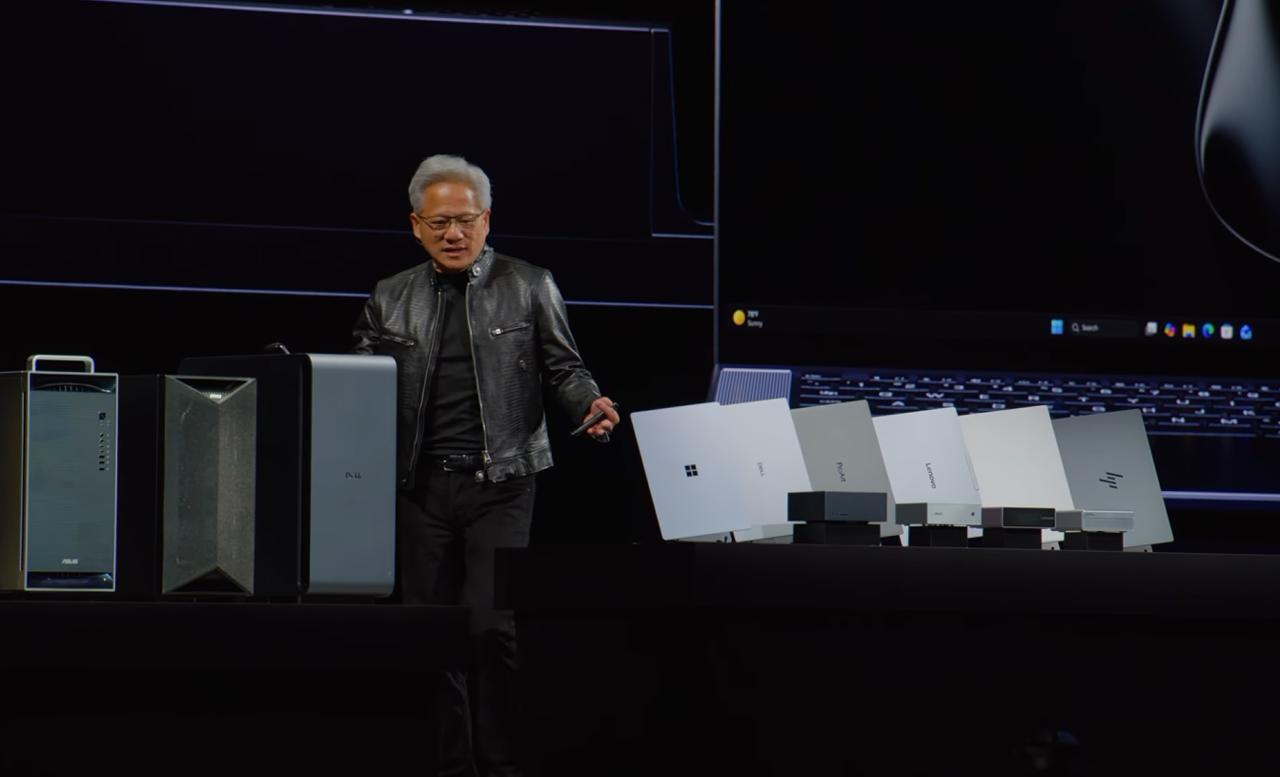
Even historic brands of the caliber of Acer and Gigabyte have confirmed the development of entire lines of compact laptops and desktops based on this superchip, ensuring widespread coverage of every premium price range on the market.
How Does the Hardware Market Change?
NVIDIA's entry into the PC CPU market upsets the competitive balance so far based on the historic x86 architecture of Intel and AMD. RTX Spark represents a radical paradigm shift from several points of view:
- End of thermal fragmentation in laptops: Having an RTX 5070-level GPU integrated into the same silicon as the CPU eliminates the need for complex dual-fan dissipation systems and mammoth vapor chambers, allowing for reduced form factors without penalizing thermal throttling.
- Memory becomes the key factor: in traditional PC configurations, 32 GB of RAM is considered optimal for almost all tasks. The advent of the era of Local AI Agents led by RTX Spark will move the standard request towards the unified 64 GB or 128 GB, changing the selection criteria of devices during purchase.
- Competitive pressure on Intel and AMD: If software emulation and anti-cheat support deliver on the promises shown at Computex, Intel (with its Core Ultra architectures) and AMD (with the Ryzen line) will have to dramatically accelerate the development of energy-efficient monolithic SoC solutions if they are not to cede significant market share in the high-end laptop and compact workstation segments.
We will closely follow the release of the first commercial samples to be able to offer you our benchmarks, price analysis, and comparison tools.

💬 Leave a comment
Formatting help