
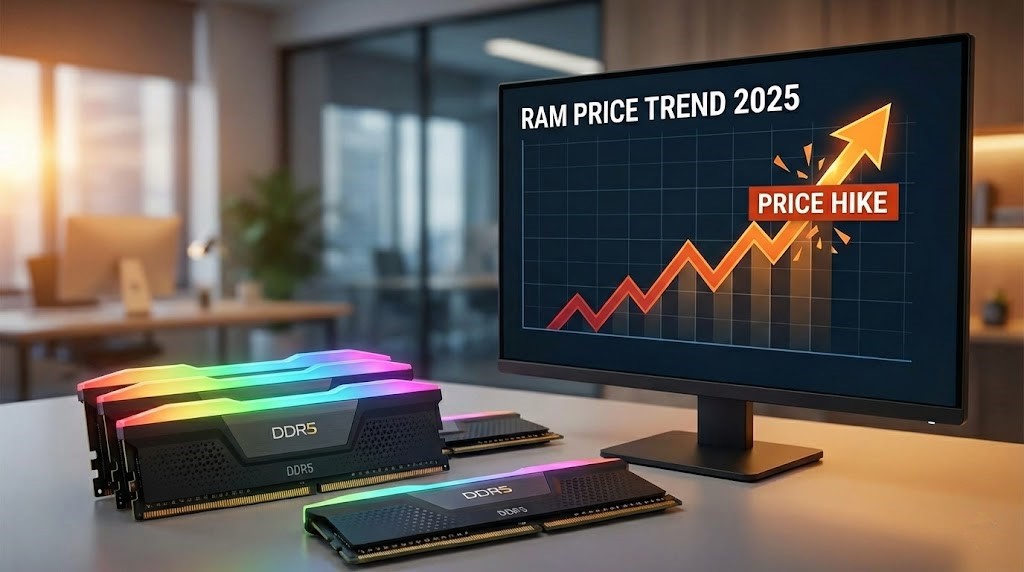
RAM prices are skyrocketing in late 2025 and 2026. Uncover the causes behind the surge and learn how to find the best value using Pangoly's new Price Trends tool.
If you have been planning a PC build or an upgrade recently, you have likely noticed a nasty surprise at checkout: memory prices are climbing fast. After a period of relative stability, the cost of both DDR4 and DDR5 kits has surged dramatically in the last few months of 2025, with some reports showing price increases of over 100% for popular kits.
It’s not just you, this is a global trend affecting the entire PC hardware market. From budget builders trying to squeeze life out of AM4 systems to enthusiasts jumping to the latest Arrow Lake or Ryzen 9000 platforms, everyone is feeling the pinch. But why is this happening now, and more importantly, is there anything you can do about it?
The Perfect Storm: Why RAM Is Getting So Expensive
The current price hike isn't caused by a single event, but rather a combination of industry shifts that have collided in late 2025.
- The AI Demand Vacuum: The biggest driver is the explosion of Artificial Intelligence. Data centers are voraciously consuming memory capacity. Manufacturers like Samsung, SK Hynix, and Micron have shifted their production focus toward high-margin HBM (High Bandwidth Memory) and server-grade DDR5 to satisfy the needs of companies like Nvidia. This leaves fewer wafers available for consumer-grade desktop RAM.
- Production Cuts: Following the post-pandemic oversupply, major memory manufacturers significantly cut production to stabilize prices. Now that demand has returned, supply hasn't caught up, creating a classic shortage.
- DDR4 End-of-Life (EOL): As the industry transitions fully to DDR5, production lines for DDR4 memory are being shut down. However, demand for DDR4 remains high for budget builds and upgrades, leading to scarcity and higher prices for older tech.
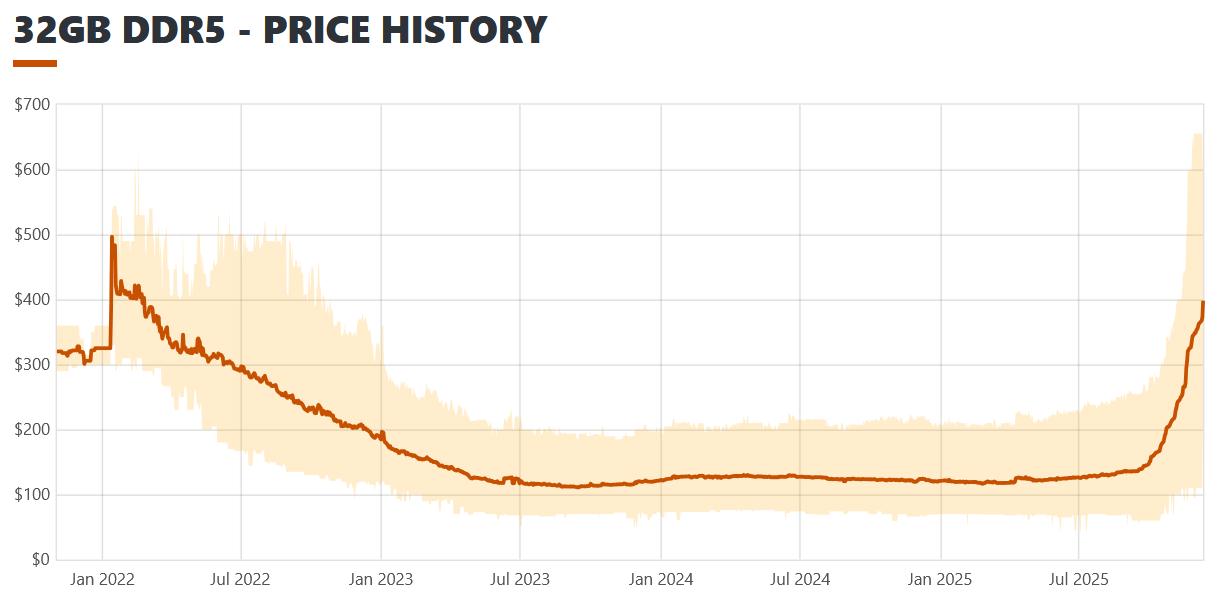
Reports from industry analysts and deep dives, such as recent investigations by Gamers Nexus, highlight that this volatility might not resolve quickly. We are seeing a structural shift where consumer hardware is competing for resources against massive enterprise buyers.
Not Just RAM: SSDs Are Next
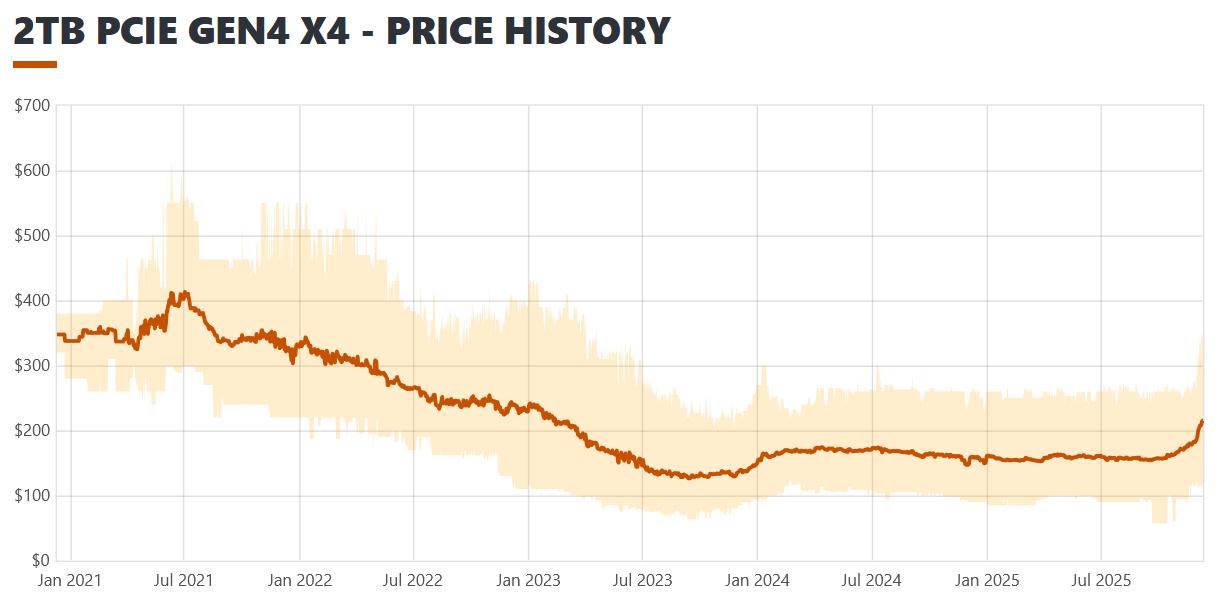
Unfortunately, the bad news extends beyond system memory. The same wafer shortages and high demand from the enterprise sector are impacting NAND flash, the storage chips used in Solid State Drives (SSDs). We are already seeing upward price corrections for SSDs, meaning the “golden era” of ultra-cheap 2TB drives may be pausing for now.
How to Spot a Good Deal in a Volatile Market
In a market where prices change daily, information is your best weapon. Panic buying often leads to overspending, while waiting too long in a rising market can cost you even more. This is exactly why we developed our latest tool to help you cut through the noise.
We are excited to announce the launch of the Pangoly Price Trends page.
This new section of our site allows you to visualize the historical pricing data of hardware categories over the last 5 years. Instead of guessing if a price is “good”, you can now see the data for yourself. The Price Trends tool covers:
- Memory (RAM): Track the divergence between DDR4 and DDR5 pricing, several capacities available.
- Processors & Graphics Cards: See how CPU and GPU prices react to market changes.
- Storage: Monitor the rising cost of SSDs and HDDs.
- Other hardware types available
By checking the trends, you can identify if a dip is a legitimate discount or just a minor fluctuation in an upward trend. It helps you decide whether to pull the trigger on that motherboard bundle now or wait for the market to stabilize.
What Should PC Builders Do?
If you need to build a PC right now, here is our advice:
- Check the History: Use our Price Trends page to see if the part you want is at a historic peak. If it is, consider looking for alternative brands or slightly different specs that haven't spiked as hard. You can also check for specific product's price history.
- Consider DDR5: While DDR5 prices are rising, it is the future standard. Investing in a DDR4 platform now might save money upfront, but with DDR4 prices also inflating due to scarcity, the value proposition is shrinking. A DDR5 kit offers better longevity for future upgrades.
- Don't Wait on Storage: If you need an SSD, buying sooner rather than later is likely the safer bet, as NAND shortages are expected to worsen into 2026.
The market is tough right now, but with the right data, you can still find value. Keep an eye on the charts, compare your options, and happy building!


💬 Leave a comment
Formatting help